LLM inference that never leaves the building
Classifying survey questions against Article 9 GDPR means the data is, by definition, the data you are not allowed to send anywhere. Notes on building the whole thing on-premise.
This is starter content. Replace it with your own write-up.
Article 9 of the GDPR names the special categories of personal data: racial or ethnic origin, political opinions, religious beliefs, trade union membership, genetic and biometric data, health, sex life, sexual orientation. Processing them is prohibited by default, with a short list of exceptions.
Social science surveys ask about all nine of those, constantly. A longitudinal study asks about health, income, education, religion, and family structure in a single wave. Somebody has to go through the item bank and flag which questions touch Article 9 — and at the Leibniz Institute for Educational Trajectories, that somebody was a person with a spreadsheet.
The obvious solution is the illegal one
An LLM is very good at this task. The reasoning is short, the categories are well defined, and the input is a sentence.
The obvious implementation — call a hosted API — is exactly the thing you cannot do. The questions themselves are institute research material, and the reason you are classifying them is that they are sensitive. Shipping them to a third-party endpoint to find out whether they are sensitive is a circular argument that a data protection officer will not enjoy.
So: everything local.
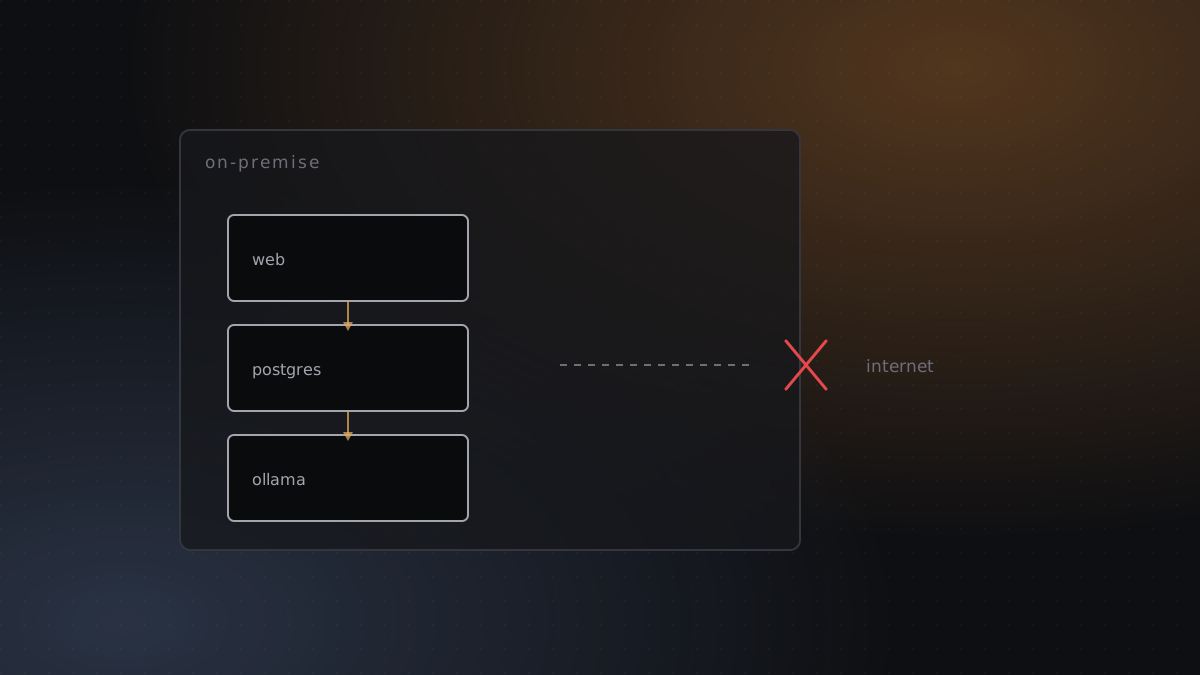
Three containers
services:
  web:
    build: .
    environment:
      DATABASE_URL: postgres://app:$POSTGRES_PASSWORD@db:5432/classifier
      OLLAMA_HOST: http://ollama:11434
    depends_on: [db, ollama]

  db:
    image: postgres:17
    volumes: ['pgdata:/var/lib/postgresql/data']

  ollama:
    image: ollama/ollama:latest
    volumes: ['models:/root/.ollama']
    # No published ports. Reachable only on the compose network.
The last line is the important one. ollama has no ports: entry, so nothing outside the
compose network can reach it — including anything that gets compromised on the host later.
What surprised me
Structured output matters more than model size. A 7B model asked for free text was worse than a 7B model constrained to a JSON schema of the nine categories plus a confidence. Most of what looked like reasoning failure was formatting failure.
Latency stopped being a UX problem once the work was batched. Reviewers do not classify one question; they classify a wave. Queueing a few hundred items and mailing a result changed the requirement from “sub-second” to “before lunch”.
The audit trail is the product. The classifier’s output is a recommendation. What the institute actually needed was a record: which model version, which prompt, which day, which human confirmed it. That is a Postgres schema problem, not a machine learning problem, and it took longer than the model work.
What I would do differently
Start with the schema and the audit log, then bolt on the model. I did it in the other order, and rewrote the interesting half twice.