Digital Transformation in Tuvalu: How to save a drowning nation
Tuvalu wants to become the world's first digital nation before rising seas take its land. My case study for a Digital Transformation module: the drivers, five unresolved challenges, five proposed solutions and how they fit national goals.
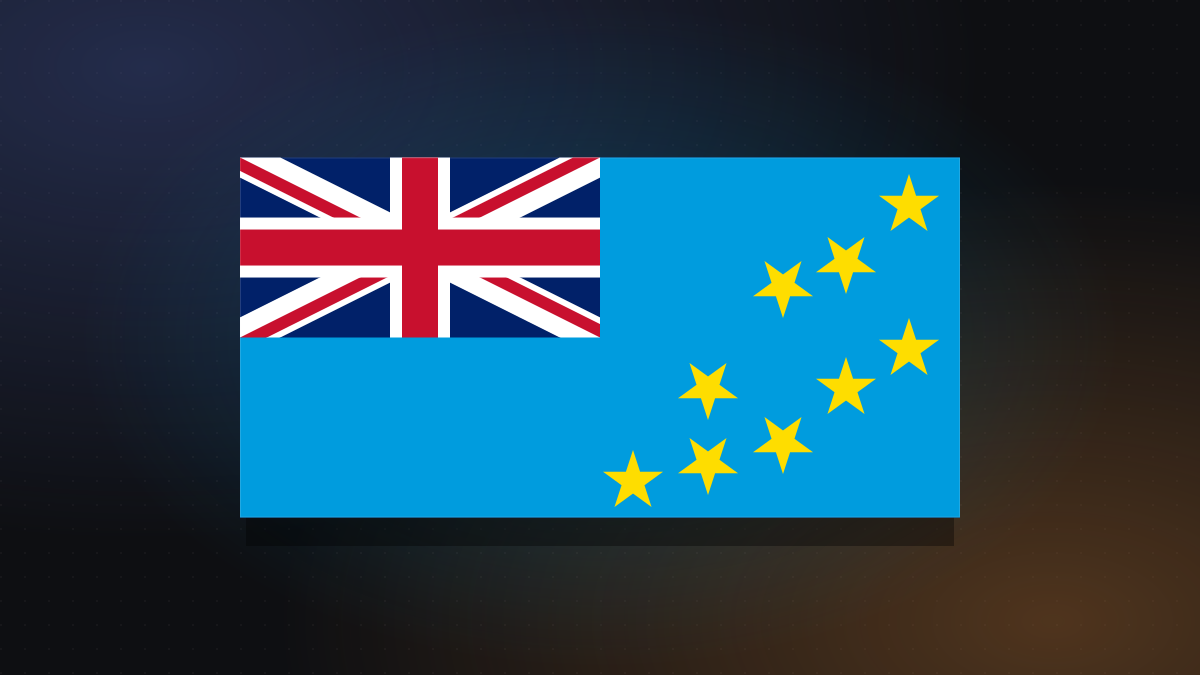
A case study on the digitalisation of a small island state facing existential threat: my report for the module CRDD H1200 Digital Transformation at TU Dublin. This is neither proper scientific work nor peer reviewed. CHECK SOURCES!
Introduction
Tuvalu is an island nation in Oceania with about 10,600 residents living on nine small islands with a total land area of about 25 km² (Tuvalu Central Statistics Division and Pacific Community, 2025, pp. 1, 5). About 62% of Tuvalu’s population lives in the capital, Funafuti (Tuvalu Central Statistics Division and Pacific Community, 2025, p. 5), half of which is projected to be flooded by daily high tides by 2050 (McElroy, 2025). This makes Tuvalu one of the first nations directly experiencing the devastating effects of climate change. Tuvalu faces not only the loss of land but also the loss of its sovereignty, its national identity and thus its very existence. At the UN Climate Change Conference (COP27) in 2022, Tuvalu presented its Future Now Project and pledged to become the ‘world’s first digital nation’, able to preserve its culture and continue to govern even if its land becomes uninhabitable (Rothe et al., 2024). The project has already produced a digital twin of a tiny islet, a rewritten constitution and the country’s first submarine cable, activated in October 2025 (Accenture, n.d.; Kofe & Marinaccio, 2023; Kofe et al., 2025).
Despite these achievements, Tuvalu faces considerable challenges. The country is highly dependent on foreign financial aid, and its small population, limited resources and remote location make it difficult to implement and maintain digital solutions and to attract and keep skilled IT staff from emigration. The country also lacks the legal framework required for a full transition to digital government.
This report asks whether a nation can be fully digitalised, and what Tuvalu still has to solve to make its Digital Nation work. The following sections cover Tuvalu’s digital transformation journey, its current challenges, proposed solutions, and their alignment with national goals and sustainability.
Digital Transformation Context
Digital Transformation (DT) is defined as ‘the integration of digital technology into all areas of a business, fundamentally changing how it operates and delivers value to customers’ (Busalim, 2026). This definition still applies to Tuvalu, even though not directly. For Tuvalu, the ‘customers’ are all citizens on the islands and abroad, and the value at stake is not market share but the continued existence of the state. This section is structured around the four dimensions of any transformation: business, technology, data and people (Busalim, 2026).
Drivers. The main driver is not ‘business’ but sea-level rise. The sea around Funafuti is already about 15 cm higher than it was 30 years ago, and much of Tuvalu’s land and critical infrastructure is expected to lie below average high tide by 2050 (NASA Sea Level Change Team, 2023). This threatens Tuvalu’s recognition as a state, since the Montevideo Convention defines a state by a permanent population, a defined territory and an independent government (Rothe et al., 2024). The COVID-19 pandemic added yet another driver: the government needed a reliable network to the outer islands for remote schooling and public services (Kofe et al., 2025).
Business. In 2021, Minister Simon Kofe launched the Future Now Project (Kofe et al., 2025). Its legal track produced a new constitution (in force since 1 October 2023), which declares Tuvalu’s statehood and maritime zones permanent regardless of the flooding (Kofe & Marinaccio, 2023). They also seek international backing for this position: the Falepili Union treaty with Australia (2023) also opens a migration pathway of 280 visas a year (Pedro & Marinaccio, 2026), and (recently) in September 2026 the UN General Assembly adopted a declaration affirming continuity of statehood and stable maritime zones (AOSIS, 2026). The Digital Nation would allow the government to keep serving citizens from another location in a worst-case scenario (Kofe et al., 2025). Tuvalu has also already turned one digital asset into income: its country code .tv. From 2001, Verisign paid a flat fee of US$5 million a year, while reportedly earning over US$25 million a year from the domain itself (Ligaiula, 2022). This is an example of digitalisation: using digital technology to ‘change a business model and provide new revenue’ (Busalim, 2026, Lec 1, p. 42).
Technology. Before 2020, Tuvalu relied on weather-vulnerable satellite links with very limited capacity. For example, the main government building was reported to only have a shared bandwidth of 73 Mbps (Kofe et al., 2025). A Kacific agreement raised this to 640 Mbps in 2020, a Starlink gateway added up to 3 Gbps in 2025, and the Vaka submarine cable, activated on 24 October 2025, can scale beyond 10 Gbps (Kofe et al., 2025). The US$56 million cable was fully grant-funded by foreign partners (AIFFP, 2024, Section AIFFP contribution).
Data. The Digital Nation consists mainly of a digital twin of the land, a Digital Ark of cultural objects and practices, and digitised government services (Pedro & Marinaccio, 2026). For COP27 in 2022, Accenture built a virtual copy of the islet Te Afualiku in six weeks (Accenture, n.d.), and LiDAR scans of all 124 islands and islets have since been reported complete (Siosi Samuels, 2026). A national digital ID is planned so that every Tuvaluan, at home or abroad, can access services online (Kofe et al., 2025).
People. Tuvaluan identity rests on fenua, a concept that links land, people, and culture (Rothe et al., 2024). In community consultations in 2025 and 2026, Tuvaluans described the project mainly as a way to safeguard their culture, not to leave their islands (Pedro & Marinaccio, 2026). Note that Tuvalu has a relatively small population, and a significant portion of its citizens live abroad (Tuvalu Central Statistics Division and Pacific Community, 2025). This means that change management, necessary for DT, is relatively easy to implement, as the government can reach out to the citizens on a much more personal level than in larger countries (e.g. Estonia, a nation that managed to widely implement DT across the country).
Challenges
Busalim (2026, Lec 1, p. 36) names five key challenges resulting from DT: poor data quality and bias, data vulnerability, resistance to digital culture, over-automation and governance difficulties. Although Tuvalu is making considerable progress, five concrete challenges remain unresolved. They are labelled C1–C5 so that the solutions section can address each separately.
Organisational. C1 Donor dependency. The Vaka cable was entirely grant-funded (AIFFP, 2024, Section AIFFP contribution). Those donors want to be involved in the planning and implementation process: due to a World Bank spending deadline ‘the government was required to utilize funds within a specific timeframe, leading their cabinet to approve digital overhauls of health, attorney general, and immigration offices’ (Mittal & Ranjan, 2025). Across the Pacific, donors pay for one-off infrastructure but give little attention to maintenance and local skills (Mittal & Ranjan, 2025). This does not just lead to wasted resources, but also creates a lack of control over its own projects. C2 Talent flight. Mittal and Ranjan (2025) call brain drain ‘perhaps the most fundamental constraint on sustainable digital transformation’ in the region. The Falepili (treaty with Australia for gradual migration due to land loss) pathway offers 280 Australian visas a year (Pedro & Marinaccio, 2026), equal to about 2.6% of Tuvalu’s residents each year (Tuvalu Central Statistics Division and Pacific Community, 2025). The two barriers reinforce each other: partners fund the hardware, but the people needed to run it may leave.
Technical. C3 Cyber risk and uneven access. The government itself expects the cable to bring more cyber threats, scams and cyberbullying (Kofe et al., 2025). For a state that plans to keep its registries online, a breach would threaten sovereignty, not just privacy. As an ally of Taiwan, Tuvalu’s passport and government databases are also a likely target for state-sponsored hackers (The Diplomat, 2025). Access is also uneven, as 4G is so far available only on Funafuti (Mittal & Ranjan, 2025). C4 Legal gaps and foreign hosting. Tuvalu has neither digital ID legislation nor a data protection law (Nationality for All, 2025). At the same time, moving government services or cultural resources to the cloud ‘would create whole new dependencies’ on transnational corporations and infrastructure in other countries (Rothe et al., 2024). Without such a law, Tuvalu has no legal leverage over these providers.
Cultural. C5 Cultural acceptance & legitimacy. The idea of a digital nation is heavily debated. In 2023, opposition leader Enele Sopoaga argued that a digital Tuvalu in the metaverse ‘implies that Tuvalu will disappear’, and international critics spoke of ‘technological solutionism’ (Rothe et al., 2024), that is, the belief that technology alone can solve underlying social and political problems. Tuvaluans consulted in 2025 and 2026 supported the project as a way to safeguard their culture while staying (Pedro & Marinaccio, 2026). If it looks like preparation for leaving, it may lose that support.
All those challenges form a cycle: donor money (C1) buys systems that few local staff can maintain (C2). This means data is stored on foreign platforms without necessary legal safeguards in place (C4), which increases cyber risk (C3) and weakens public trust (C5). Less public trust will decrease public funding and thus make the country more dependent on donor money (C1).
Proposed Innovative and Sustainable Solutions
Before introducing my own recommendations, I first want to highlight the proposals by Siosi Samuels in his 2026 blog post. His 2020 ‘5-Point Plan’ proposed renegotiating the .tv domain deal, better internet, a digital skills programme, a blockchain-based National Digital Ledger and investing in sovereignty. He now counts four as addressed. The ledger never got past Phase 1, and he argues ‘Tuvalu was right to wait’, because blockchain was not ready ‘for the weight of a nation’ (Siosi Samuels, 2026).
Since the challenges reinforce each other, systems thinking suggests that each solution should break one link, so that the solutions strengthen one another (Busalim, 2026, Lec 1, p. 49).
S1: Reduce donor control (C1). I propose reserving a fixed yearly Technology Fund for maintenance that sets its own priorities. This fund could be financed by a share of the .tv income, which, alongside fishing licences, has long been one of Tuvalu’s largest sources of government revenue (Conway, 2015, p. 241). New systems (especially civil registries) should build on open-source systems, so the country is not dependent on any single vendor or provider. This approach ensures that Tuvalu can switch partners freely and maintain control over its digital infrastructure.
S2: From brain drain to think tank (C2). Migration to Australia should not be stopped for safety reasons, but thanks to the Vaka cable, Tuvaluan IT staff in Australia could maintain government systems remotely. This would also include introducing cloud-based services for remote software development, further improving the country’s digital presence. At home, the youth workshops in 3D scanning and digital archiving (Siosi Samuels, 2026) could grow into paid IT traineeships and placements with major technology companies.
S3: A data embassy and access for everyone (C3, partly C4). Estonia keeps copies of its key registers in a data centre in Luxembourg, where data and servers have diplomatic immunity (Microsoft EU Policy Blog, 2017). Tuvalu could sign such agreements with two partners, e.g. Australia and a neutral state, so that no single country holds all its data, and records survive even a successful attack on Funafuti. Make all those services independent of each other, to improve security (see next paragraph). Also join forces on security to improve cybersecurity. As 4G is limited to Funafuti, every service should still be accessible via SMS.
S4: Legal and blockchain (C4). Before launching the digital ID, Tuvalu needs a data protection law and a digital ID law. They give it legal leverage over foreign cloud providers and can be written into the data embassy agreements (see above). The ID itself should issue digitally signed credentials for citizenship, and personal legal assets like patents or land rights. Blockchain (making the data embassy publicly verifiable) should be used far more narrowly than in the paused ledger (Siosi Samuels, 2026): only a hash of each record is stored on a ledger. Anyone can host their own verification node and then verify that a record is unchanged, even after servers abroad get compromised. Such a ledger requires little energy, and since it stores hashes instead of the data, it does not carry ‘the weight of a nation’ (Siosi Samuels, 2026). I suggest SHA-256, since SHA-1 has recently been broken (Stevens et al., 2017).
S5: The digital heritage (C5). The project keeps support as long as it motivates people to stay (Pedro & Marinaccio, 2026), so the digital twin has to be useful as soon as possible. Solar-powered IoT sensors for water level, waves, and weather could feed the LiDAR twin, while machine-learning models, combined with NASA satellite data, forecast high floods and send SMS warnings. This delivers what Minister Seve Paeniu asked for, ‘proper early warning and data-based and science-led policy design’ (NASA Sea Level Change Team, 2023). For the Digital Ark, communities should decide what is relevant for recording and what is not. LLMs could help transcribe oral histories. Since Tuvaluan is a minority language, the archive should be bilingual, with English translations.
Feasibility. S1, S3 and S4 are mostly legal work and cost little; S2 and S5 need staff and sensors, which S1 helps pay for. Each should start as a small pilot, following the lecture’s advice to ‘experiment, be agile, be ready to fail’ (Busalim, 2026, Lec 1, Slide 79), which is exactly the lesson of the paused ledger.
Alignment with Business Goals and Sustainability
For a government, business goals are national strategic goals. Tuvalu’s are set by Te Kete (Tuvaluan for ‘basket’), the National Strategy for Sustainable Development 2021–2030, whose vision is ‘a peaceful, resilient and prosperous Tuvalu’. It is organised into five strategic priority areas: Enabling Environment, Economic Development, Social Development, Island and Culture Development, and Infrastructure Development (Government of Tuvalu, 2020). Tuvalu’s commitment to perpetual statehood (Constitute Project, 2023) gained global backing when the UN adopted the Declaration on Sea-Level Rise in September 2026, recognising continuity of statehood and permanent maritime boundaries (Esengo, 2026).1
1 I didn’t find a first-hand source for thisThe proposed solutions support these goals in several ways. The digital twin supports Infrastructure and Island and Culture Development by preserving culture and providing an asset to raise awareness: This is how the island once looked. Digitalising government work supports Economic Development by making revenue streams more efficient, it strengthens resilience and reduces financial dependence on donors. The digital ID advances the Enabling Environment and Social Development priorities by giving every citizen, including those abroad, access to services and a legal identity beyond their passport. Together, the solutions turn the constitutional promise of perpetual statehood from a promise into reality.
The solutions also contribute to the UN Sustainable Development Goals (United Nations, n.d.): Goal 13 on climate action through the early-warning twin (S5), Goal 16 on strong institutions with the laws and the data embassy (S3, S4), and more specifically Target 16.9 on legal identity for all with the digital ID (United Nations Legal Identity Agenda, n.d.).
From an environmental, social and governance (ESG) perspective (Sustainable Energy Authority of Ireland, 2024), the environmental aspect rests on adaptation (S5), solar-powered IoT devices. The social aspect is inclusion, but with 4G still limited to Funafuti (Mittal & Ranjan, 2025) it is easy to overlook the need for analogue systems, and a digital ID that eases access to services abroad may also ease emigration. The governance aspect carries a lot of complexity. A data protection law, a data embassy and locally trained maintainers would address popular concerns about surveillance and dependency on cloud providers. Still, without adequate legal and technical safeguards, the Digital Nation is vulnerable and diplomatic relations (especially the valuable benefits Tuvalu receives from Australia) could be at risk.
Conclusion
Can a nation be fully digitalised? Not entirely: registries, cultural knowledge and government services can be digitalised, but not land or a resident population. Tuvalu shows that DT can also be a strategy for national survival rather than market advantage. An ongoing environmental catastrophe made it necessary to develop a strategic response of politics, diplomacy and technology, a cultural archive and e-government. The activation of the Vaka cable in October 2025 removed the main technical bottleneck (Kofe et al., 2025). The binding constraints are now donor-driven timelines, talent flight, the absence of data protection legislation and dependence on foreign platforms (Hegde, 2024; Mittal & Ranjan, 2025; Nationality for All, 2025).
The five proposed solutions (S1–S5) each break one link of this cycle: national funding for maintenance, diaspora skills, a data embassy, legal and ledger-based safeguards, and an early-warning twin with a community-owned Digital Ark.
The outlook is cautiously optimistic. The UN Declaration on Sea-Level Rise strengthens the legal foundation of the Digital Nation (Esengo, 2026), but success will depend less on technology than on political will, sustained funding for maintenance, local skills and privacy safeguards. If Tuvalu balances these factors, it will set a precedent for other small island states facing the same rising tide, a reminder that the existential threat of climate change is not Tuvalu’s alone.
References
- Accenture. (n.d.). Climate change gets real in the metaverse: Tuvalu case study. Retrieved October 24, 2026, from https://www.accenture.com/en/case-studies/technology/tuvalu
- AIFFP. (2024). Tuvalu Vaka cable. Australian Infrastructure Financing Facility for the Pacific. https://www.aiffp.gov.au/investments/investment-list/tuvalu-vaka-cable
- AOSIS. (2026). UN member states adopt first declaration on sea level rise, affirming stable maritime zones and continuity of statehood. Alliance of Small Island States. https://aosis.org/document/press-release-un-member-states-adopt-first-declaration-on-sea-level-rise-affirming-stable-maritime-zones-and-continuity/
- Busalim, A. (2026). CRDD H1200 Digital Transformation. Technological University Dublin.
- Constitute Project. (2023). Tuvalu’s Constitution of 2023. https://constituteproject.org/constitution/Tuvalu_2023
- Conway, J. M. (2015). Entrepreneurship, Tuvalu, development and .tv: A response. Island Studies Journal, 10(2), 229–252. https://doi.org/10.24043/isj.329
- Esengo, J. N. (2026). Tuvalu prime minister addresses UN General Assembly after landmark declaration affirms nationhood continuity. JURISTnews. https://www.jurist.org/news/2026/09/tuvalu-prime-minister-addresses-un-general-assembly-after-landmark-declaration-affirms-nationhood-continuity/
- Government of Tuvalu. (2020). Te Kete: Tuvalu National Strategy for Sustainable Development 2021–2030. Ministry of Finance. https://lpr.adb.org/resource/te-kete-tuvalu-national-strategy-sustainable-development-2021-2030
- Hegde, A. (2024). Digital nations and the future of the climate crisis. International Journal of Communication, 18, 755–761. https://ijoc.org/index.php/ijoc/article/download/21837/4462
- Kofe, S., Iuni, F., & Marinaccio, J. (2025). The Tuvalu Vaka cable: Building connectivity and a Digital Nation. Devpolicy Blog, Development Policy Centre, Australian National University. https://devpolicy.org/the-tuvalu-vaka-cable-building-connectivity-and-a-digital-nation-20251204/
- Kofe, S., & Marinaccio, J. (2023). Tuvalu Constitution updated: Culture, climate change and decolonisation. Devpolicy Blog, Development Policy Centre, Australian National University. https://devpolicy.org/tuvalu-constitution-updated-culture-climate-change-and-decolonisation-20230921/
- Ligaiula, P. (2022). Better dotTV deal for Tuvalu. Pacific Islands News Association (PINA). https://pina.com.fj/2022/05/02/better-dottv-deal-for-tuvalu/
- McElroy, A. (2025). A sliver of hope from the middle of the Pacific Ocean. Green Climate Fund. https://www.greenclimate.fund/about/news-and-updates/stories/sliver-hope-middle-pacific-ocean
- Microsoft EU Policy Blog. (2017). Diplomatic immunity for data: Estonia creates a virtual embassy. https://blogs.microsoft.com/eupolicy/2017/12/14/diplomatic-immunity-data-estonia-creates-virtual-embassy/
- Mittal, S., & Ranjan, A. (2025). The state of digital transformation in Pacific Island countries. Carnegie Endowment for International Peace. https://carnegieendowment.org/europe/research/2025/11/the-state-of-digital-transformation-in-pacific-island-countries
- NASA Sea Level Change Team. (2023). NASA–UN partnership gauges sea level threat to Tuvalu. https://sealevel.nasa.gov/news/265/nasa-un-partnership-gauges-sea-level-threat-to-tuvalu
- Nationality for All. (2025). Digital ID overview: Tuvalu. Statelessness Encyclopedia Asia Pacific. https://seap.nationalityforall.org/digital-id/regional-overview/the-pacific/tuvalu/
- Pedro, V. E., & Marinaccio, J. (2026). Hope in Tuvalu’s climate change response: From Falepili to Digital Nation. Devpolicy Blog, Development Policy Centre, Australian National University. https://devpolicy.org/hope-in-tuvalus-climate-change-response-from-falepili-to-digital-nation-20260220/
- Rothe, D., Boas, I., Farbotko, C., & Kitara, T. (2024). Digital Tuvalu: State sovereignty in a world of climate loss. International Affairs, 100(4), 1491–1509. https://doi.org/10.1093/ia/iiae060
- Siosi Samuels, G. (2026). Where Tuvalu’s Digital Nation stands in 2026. https://www.georgesiosi.com/blog/tuvalu-digital-nation-2026-update
- Stevens, M., Bursztein, E., Karpman, P., Albertini, A., & Markov, Y. (2017). The first collision for full SHA-1. Advances in Cryptology – CRYPTO 2017. https://shattered.io
- Sustainable Energy Authority of Ireland. (2024). Environmental, Social and Governance Policy. SEAI. https://www.seai.ie/sites/default/files/publications/SEAI-ESG-Policy.pdf
- The Diplomat. (2025). Can digital Tuvalu survive a cyberattack? https://thediplomat.com/2025/02/can-digital-tuvalu-survive-a-cyberattack/
- Tuvalu Central Statistics Division and Pacific Community. (2025). Tuvalu 2022 census on population and housing: Analytical report. Pacific Community (SPC). https://stats.gov.tv/download/85/population-and-housing-census/1836/tuvalu_2022_census_report.pdf
- United Nations. (n.d.). 17 goals to transform our world. Retrieved October 24, 2026, from https://www.un.org/hi/node/144041
- United Nations Legal Identity Agenda. (n.d.). United Nations Legal Identity Agenda. Retrieved October 24, 2026, from https://unstats.un.org/legal-identity-agenda